Mridanga
Traditional drum for kirtan - the soul of musical instruments
Mridanga Basics – Introduction
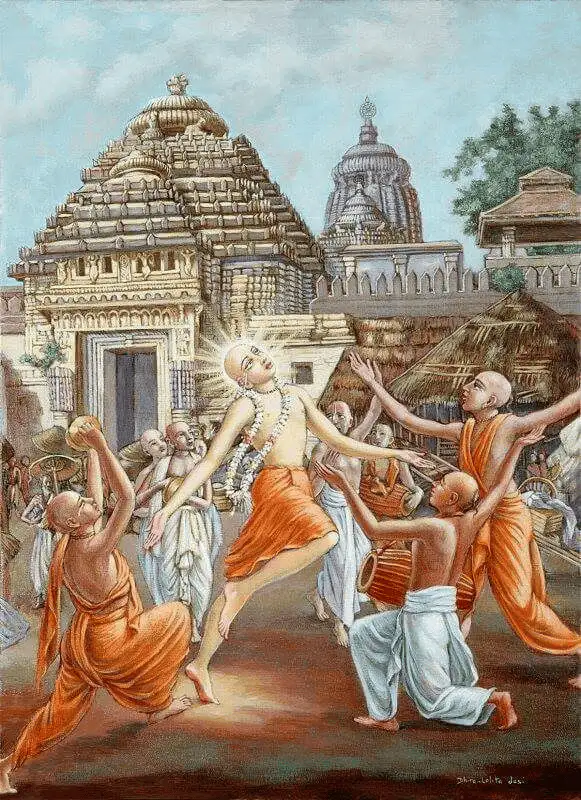
The sankirtana of Chaitanya Mahaprabhu in the streets of Navadvipa is described as follows:
mrdanga-karatala sankirtana-mahadhvani
'Hari' 'hari' – dhvani vina anya nahi suni
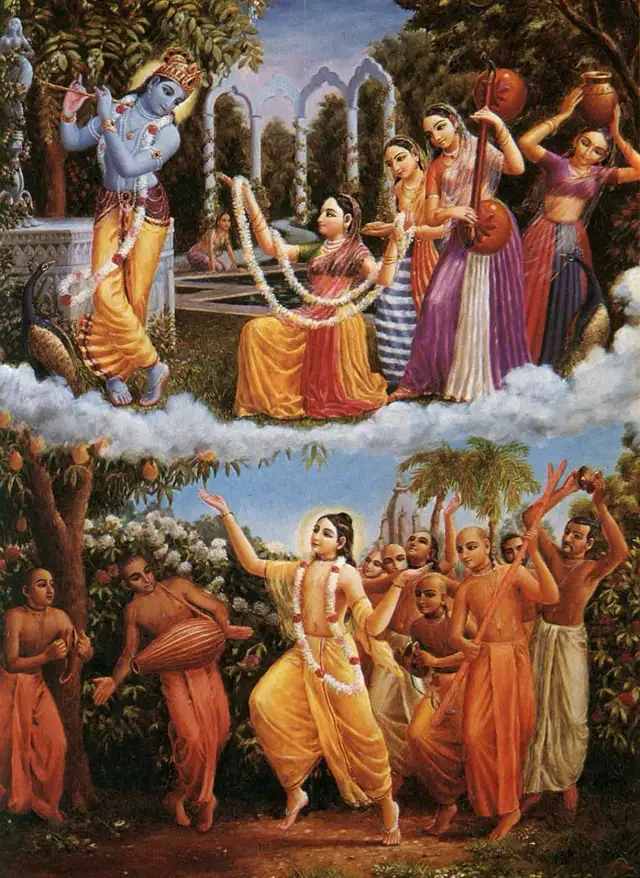
"When the sankirtana movement thus started, no one in Navadvipa could hear any sound other than the words 'Hari! Hari!' and the sounds of the mridanga and the clashing of karatalas." The music created together with mridanga and karatalas invokes Mohini shakti – the enchanting potency that intoxicates the mind. The sound of the mridanga creates auspiciousness, just like the sound of the conch shell.
Inauspiciousness cannot remain where mridanga and karatalas are sounding. In his publication "Sharanagati," Shrila Bhaktivinoda Thakura states: "My mind always yearns for the opportunity to hear the music of the mridanga. My heart dances in ecstasy upon hearing the kirtan brought by Lord Gaurachandra."
"Mridanga" is an auspicious instrument, therefore one must learn to play according to the true and proper method from a guru. Creating your own rhythms with mridanga is inappropriate. According to Shrila Jiva Goswami, the word "kirtana" can be read as two separate words – "ki" and "ratana". "Ki" means "what", and "ratana" means "jewel". "What is the jewel?" Through kirtan we should strive for the highest, best jewel of music. Our singing and playing must be pure and clear.
And what should the audience be? Do not throw jewels to ordinary people, for they will not use them properly. No, give them to the king. He will use them properly and thus everyone will benefit. Similarly, we should not sing to satisfy an unqualified mass of people. We should sing to Krishna, the Supreme Lord, and satisfy His highest level of refined taste for pure Vedic music. Then everyone will be satisfied and happy.
Playing Proper Rhythm
When the perfect sound of the mridanga resonates, all jivas (souls) are liberated, such as animals, birds, and trees. The sound of the mridanga reaches three planetary systems: Svarga, Mrtya, and Patala.
By studying how to play the mridanga and practicing regularly and systematically, we will easily understand melody and rhythm and learn to accompany the lead singer. The drum is the soul of all musical instruments – it provides tempo and rhythm.
A good mridanga player knows the entire melody perfectly. He knows what happened before, what is happening now, and what will come next. He also knows three different melodic levels:
Very slow, low-pitched melody emanating from the belly (antara)
Medium-speed, medium-pitched melody emanating from the throat (madhyama)
Fast, high-pitched melody emanating from the head
Distinguishing these levels, the mridanga player is always ready to play the appropriate rhythm in the proper tala. In other words, he lives in the song and thus becomes the soul of the song. Then he plays perfectly.
The Need to Deepen into Mridanga
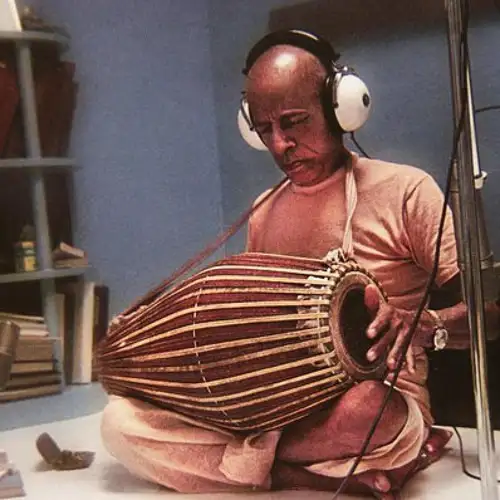
Here one argument can be presented that we have already encountered. Did we not receive the entire process of Krishna consciousness from Shrila Prabhupada? Do we need anything more than what he taught us? Was he not also a mridanga expert who gave us sufficient knowledge about this instrument? So why should bhaktas learn such a complex system as we present here? Why not just play the mantras that Shrila Prabhupada gave us?
Shrila Prabhupada was an expert musician and mridanga player who learned from childhood from a professional teacher, but he himself was not a professional. His knowledge consisted of the basics, yet a very pure system.
If you joyfully use the system given by Shrila Prabhupada and never change any beat, then it is wonderful. Just continue. If you follow Shrila Prabhupada's instructions one hundred percent, you have already achieved kirtan perfection, because you enjoy the pure essence of the holy name. But there are those who cannot be happy and satisfied playing only two or three mantras. So it is better to adopt the pure system transmitted according to the parampara tradition than to speculate and spoil the taste of kirtan.
Reintroducing the Vedic Way
Although Shrila Prabhupada gave us the essence of everything – pure Krishna consciousness and the process to achieve it – he did not give us many things because his time was limited. Many books are yet to be translated, many aspects of Vedic art and culture still need to be discovered and explained, an entire Vedic society in the form of daivi-varnashrama-dharma needs to be created. This was Shrila Prabhupada's clear desire.
When master Bablu – the main teacher of our mridanga course – was a small boy, Shrila Prabhupada personally encouraged him to continue learning the pure mridanga system so that he could later teach it to others. Remember that we sing and play music for Krishna's pleasure and should do so to the best of our ability. The acharyas carefully indicated how to sing bhajana: which rhythm, which melody. Music is an inseparable part of our divine Gaudiya Vaishnava culture and Shrila Prabhupada understood this very clearly.
In ISKCON in the beginning there was an extraordinary situation and there was no time to address these aspects of Krishna consciousness. First, the system had to be created. Now, as our spiritual society grows, there are many talented young bhaktas who can meet other needs, and if some of them can master this tradition of spiritual music, it will benefit the whole world and they will give great pleasure to Shrila Prabhupada.
Necessary Conditions
To learn to play the mridanga, you must have a healthy body and mental state and follow the process of devotional service. Playing the mridanga is an offering to Krishna, so the player must be His bhakta. Ideally, you should chant at least sixteen rounds of the Hare Krishna maha-mantra on japa-mala and engage in Krishna's service.
At the very least, you should strictly follow the four regulative principles of bhakti-yoga: abstain from illicit sex, meat-eating, intoxication, and gambling. If you break these principles and continue to play the mridanga, you will commit an offense, and Krishna will not accept your playing.
Why Regular Practice is Essential
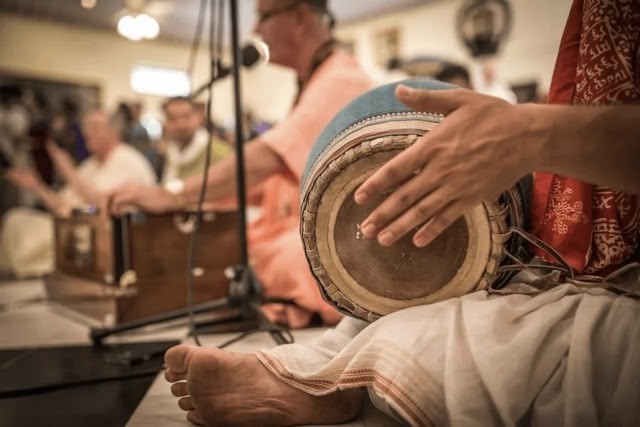
The mridanga is a powerful instrument not only in strong but also in gentle kirtans and bhajanas. To create a strong, dynamic sound, great force is not required. On the contrary, if you invest too much muscular force, your hands will become stiff and the sound will be heavy and dull. How long can you play this way? Such "dynamic" players involve their whole body to furiously pound the mridanga and eventually leave the kirtan exhausted when the kirtan has barely begun.
Good technique means you can play at double speed for hours without interruption. Playing the mridanga is a matter of technique, not force. Have you ever seen a whip artist in a circus? Cracking loudly, his whip tears small pieces of paper or even thin wooden boards from many meters away and never hits the hand holding the target. All this the performer can do by moving two fingers. Technique, not force, power is focused precisely on one point to achieve maximum effect.
The same applies to the mridanga. Practice long and continuously so that your hands are free and similar to a whip. First you must play very slowly, focusing on proper hand movement. Then gradually your stroke will become strong and clear.
Video Lessons
Where to Start Playing Mridanga?
Mridanga Pranama Mantra:
namo mridangāya namo brahma-rūpāya
lavanya-rasa-purnāya sahasra-guna-saline
Translation: I offer my respectful obeisances unto the mridanga, which is the form of the Supreme Brahman, filled with the nectar of sweet mellows and endowed with thousands of transcendental qualities.
Hand Practice Exercises
Most Important Exercises, Planting the Seed!
Te Re Ke Ta and a few variations.
Most Important Exercises, Watering the Seed!
I recommend this exercise for learning to play a fast rhythm.
After developing speed, the mantra transforms into: Te Re Ke Ta
Mantras for Kirtan
These mantras can be played even without learning hand practice exercises, but in that case, it may be more difficult to achieve higher results.
Prabhupada's Rhythm, for Slow Kirtan
Classic rhythm used by Shrila Prabhupada, ideally suited for slow kirtan and beginners.
Medium Speed Mantra
This mantra is learned quite easily, even without any hand practice preparation. Easily applicable in practice.
Tehai, Transitions
Tehai, transitions played in kirtan after the Rama Rama part or in other cases. Te Re Ke Ta Jha x3 Ke Ta Ke Ta Jha x3 Ge Na Ge Na Jha x3 Dha Guru Guru Jha x3 Ta Ke Te Re Ke Ta Jha x3
Fast Rhythm
Dynamic fast rhythm, intended for energetic kirtan and advanced players.